Tender, flavorful, and deeply savory—this Instant Pot Pork Adobo is the ultimate Filipino comfort food. With a rich, tangy sauce infused with garlic, soy sauce, and vinegar, this one-pot dish is perfect for busy weeknights or meal prep!
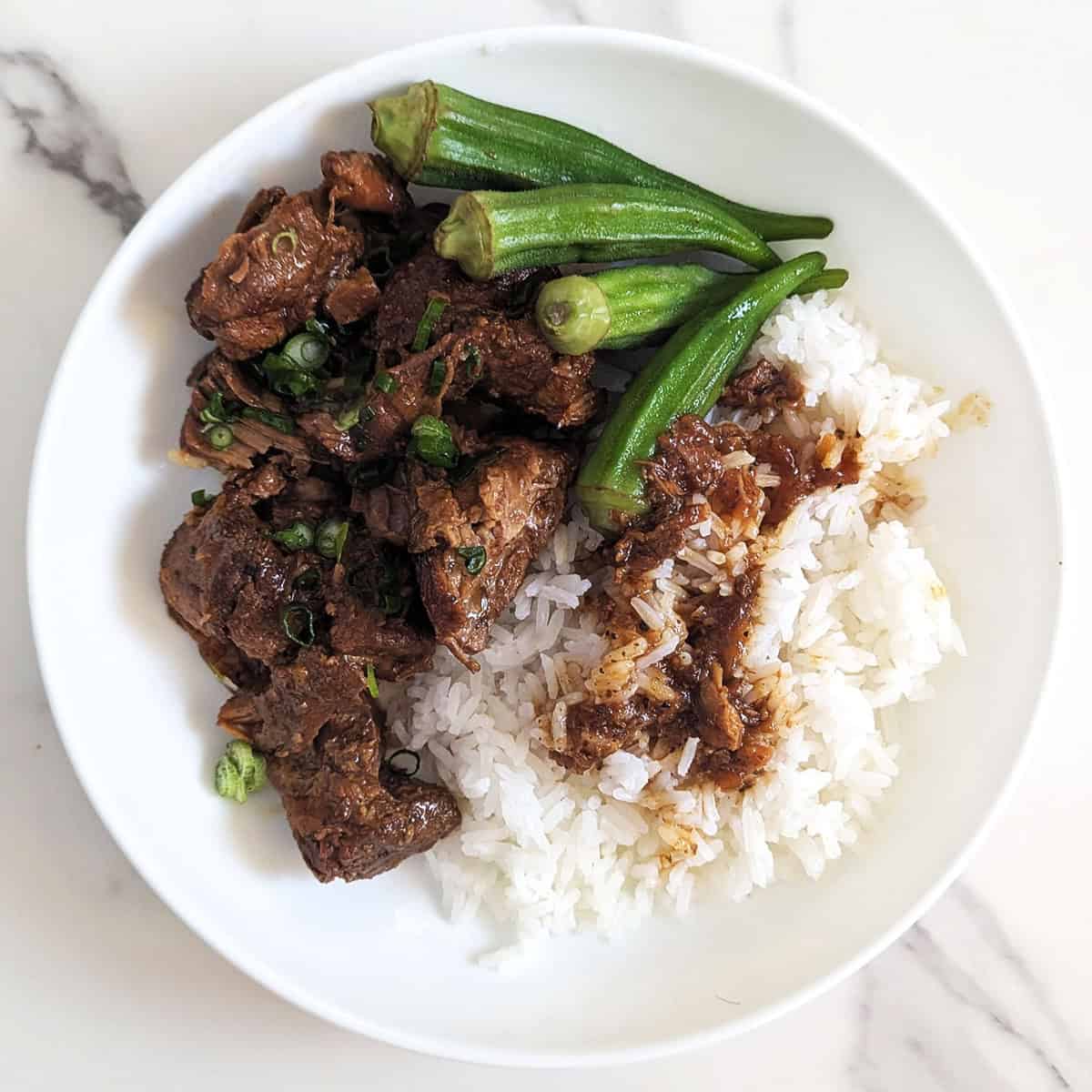
⚠ Note: This recipe will be part of an upcoming meal plan using pork shoulder/butt as the key focus. Check back for updates in the near future!
Filipino adobo is a beloved dish where meat (commonly pork or chicken) is braised in a savory mix of soy sauce, vinegar, garlic, bay leaves, and black pepper. The acidic vinegar helps preserve the dish, making it a staple in Filipino households.
This Instant Pot Pork Adobo recipe is a hands-off, foolproof way to achieve bold, traditional flavors while significantly cutting down cooking time for tender, fall-apart pork!

Filipino Pork Adobo also pairs well with blanched bok choy
Here’s what you can skip. Start at the top of this list and work your way down—only cutting as many steps as you need if you still want great results.
Each step you skip saves time, but the further down you go, the more impact it has on the final dish. Stop wherever you’re comfortable!
That said, if you’re cooking to impress, all these small details add up to a richer, more complex dish. But if you want a no-fuss, easy meal, rest assured that even with shortcuts, it’ll still turn out delicious!
Stored in an airtight container, pork adobo lasts up to 5 days—and tastes even better the next day! The soy sauce and vinegar help preserve it longer, but the pork’s texture may decline.
See also: Filipino Pork Adobo Burrito for new ways to use up leftovers!
For longer storage, freeze for up to 6 months. If it’s a little dry during reheating, add a splash of water to revive it.
Because the Instant Pot retains moisture well, and the pork and onions release liquid as they cook, you might already end up with enough sauce. That’s why I don’t recommend doubling the sauce ingredients upfront—it could make the dish too watery.
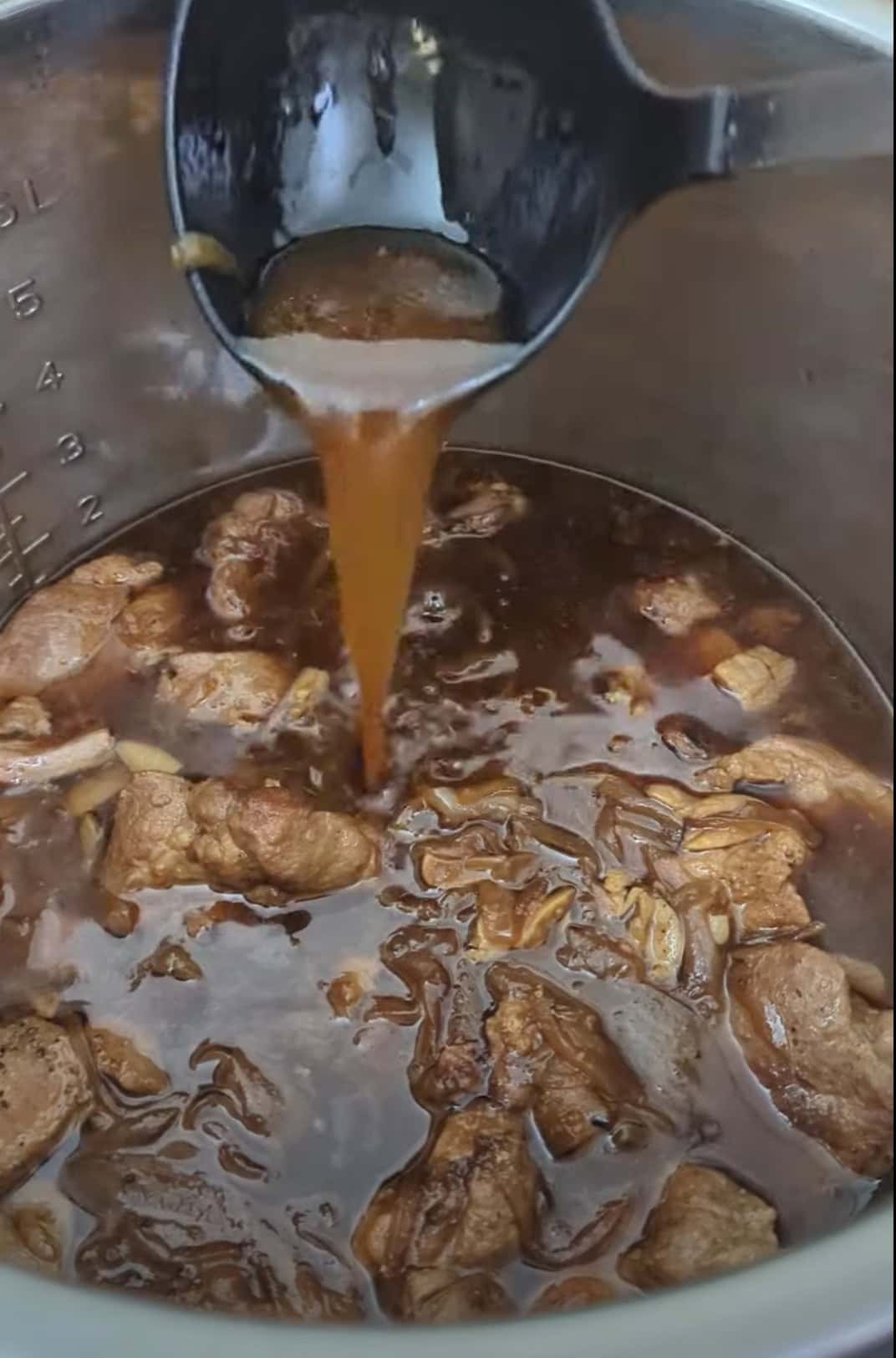
Amount of liquid released after pressure cooking
Instead, start with the recipe as written, then adjust at the end. If you want more sauce, try adding 2–3 tablespoons of (regular) soy sauce and vinegar, plus 1/4 cup of water.
The classic adobo balance is a 2:1 ratio of vinegar to soy sauce though I’ve seen others with a 1:1 ratio if you like it less tangy. Keep that in mind when tweaking to match your taste.
If you prefer a glossier, clingier sauce, mix 1 teaspoon of cornstarch with 1 tablespoon of water and stir it into the sauce while simmering.
⚠ Note: The sauce won’t stay thick after refrigeration or freezing, as the cornstarch loses its thickening power over time. If reheating leftovers, just re-thicken with another cornstarch slurry if needed.
If you’re a family of two struggling to finish the same dish for days, here’s your solution—turn your leftover adobo into something new.
Try my Filipino Pork Adobo Burrito—a flavorful twist that combines the rich, garlicky adobo you love with caramelized pineapple, creamy avocado, and quick-pickled onions, all wrapped in a warm tortilla. You might like it even more!

I’m a foodie with a simple philosophy: why should amazing food be reserved for the weekends alone? I’m all about making every meal delicious because, let’s face it, we only have so many meals in our lifetime.
My mission? To take the stress out of cooking with easy-to-use meal plans so you can enjoy mouthwatering recipes any day of week. Join me on this tasty journey and let’s savor “more taste, less waste” in every bite!
I’m a foodie with a simple philosophy: why should amazing food be reserved for the weekends alone? I’m all about making every meal delicious because, let’s face it, we only have so many meals in our lifetime.
My mission? To take the stress out of cooking with easy-to-use meal plans so you can enjoy mouthwatering recipes any day of week. Join me on this tasty journey and let’s savor “more taste, less waste” in every bite!
Email: